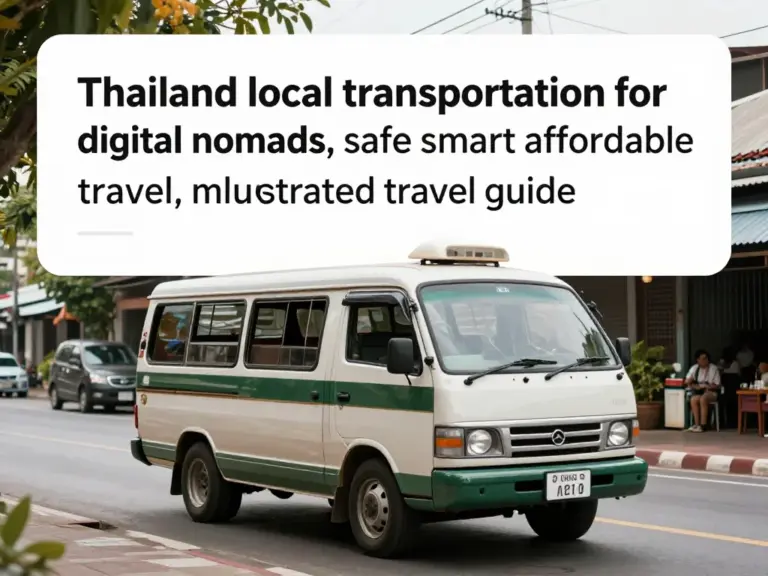
Local Transportation in Thailand: A Digital Nomad’s Guide to Safe, Smart, and Affordable Travel
- Local Transportation in Thailand: A Digital Nomad’s Guide to Safe, Smart, and Affordable Travel
For many digital nomads, Thailand is the ultimate base. With its reliable internet, vibrant food scene, and welcoming culture, it is easy to see why. However, navigating local transportation in Thailand can initially feel like a chaotic puzzle. From bustling Bangkok tuk-tuks to efficient island ferries, understanding how to get around is essential for maintaining your productivity and budget. This guide breaks down the most effective ways to navigate the country safely and smartly.
local transportation in Thailand: Understanding Your Options: The Nomad’s Transit Ecosystem
Thailand offers a diverse range of transit modes, each suited to different needs—whether you are commuting to a coworking space or embarking on a weekend adventure. The key to mastering local transportation in Thailand is knowing when to prioritize speed, cost, or comfort.
Ride-Hailing Apps: The Gold Standard
For most digital nomads, ride-hailing apps have revolutionized travel. They eliminate language barriers and price haggling. Grab and Bolt are the dominant players. They provide upfront pricing, GPS tracking for safety, and the ability to pay via credit card or digital wallet, making expense tracking a breeze.
Public Transit in Bangkok
If you are based in Bangkok, the BTS Skytrain and MRT Subway are your best friends. They are air-conditioned, punctual, and entirely avoid the city’s infamous traffic jams. For longer-term stays, invest in a stored-value Rabbit Card to save time at ticket machines.
Comparison of Transport Modes
| Transport Mode | Best For | Pros | Cons |
|---|---|---|---|
| Grab/Bolt | Door-to-door convenience | Safety, transparent pricing | Can get expensive in traffic |
| BTS/MRT | Bangkok commuting | Fast, no traffic, cheap | Crowded during rush hour |
| Motorbike Taxi | Short, solo trips | Fastest way to bypass jams | Higher risk, not for luggage |
| Songthaew | Local, short routes | Very affordable | Routes can be confusing |
Safety and Best Practices for Nomads
Safety is paramount when traveling frequently. While Thailand is generally safe, traffic accidents are a common risk. Always prioritize vehicles with seatbelts, and if you choose to rent a scooter, ensure you have a valid international driving permit and comprehensive travel insurance that covers motorbike accidents.
The Smart Nomad Checklist
- Download the Apps: Have Grab, Bolt, and Maxim installed and linked to a payment method.
- Get a Local SIM: Reliable data is essential for calling rides and using Maps.
- Carry Small Change: Keep 20, 50, and 100 Baht notes handy for Songthaews and public transit.
- Use Offline Maps: Download Google Maps for the area you are living in to navigate walking routes.
- Check Traffic: Always check Google Maps traffic conditions before starting a long trip in a car.
When you move beyond Bangkok or Chiang Mai, the infrastructure changes. In smaller towns or islands, you might rely on Songthaews (converted pickup trucks acting as shared buses). These are incredibly cheap but lack fixed schedules. Ask your local guesthouse or coworking host about the typical routes and pricing to avoid overpaying.
Conclusion
Successfully navigating local transportation in Thailand is about balancing convenience with local knowledge. By leveraging ride-hailing technology in cities and staying flexible in rural areas, you can minimize stress and maximize your time exploring this beautiful country. Start by mastering one mode of transport at a time, and soon, you will be navigating the streets like a local.
Frequently Asked Questions (FAQ)
They are fast and convenient for short distances, but they carry higher risks. Always insist on wearing a helmet and avoid them if you are carrying large luggage.
Technically, yes, or an International Driving Permit (IDP) with a motorcycle endorsement. Police checkpoints are common, especially in tourist areas like Phuket and Chiang Mai.
Songthaews and public buses are the most budget-friendly options. For city transit in Bangkok, the MRT and BTS are both affordable and efficient.
Tipping is not mandatory in Thailand. However, rounding up the fare to the nearest 10 or 20 Baht is a polite gesture appreciated by many drivers.
References
Tourism Authority of Thailand Official Site
Bangkok BTS Skytrain Official Website