Digital Payments and QR in Thailand for Solo Female Travelers
- Digital Payments and QR in Thailand for Solo Female Travelers
Traveling solo through Thailand is an exhilarating experience, offering a mix of vibrant street life, serene temples, and breathtaking landscapes. For many modern travelers, the convenience of the local infrastructure is a major draw. One of the most significant shifts in recent years has been the rapid adoption of digital payments in Thailand, specifically through the ubiquity of QR code systems. For solo female travelers, mastering this cashless ecosystem not only adds a layer of convenience but also enhances personal safety by reducing the need to carry large amounts of physical cash.
Whether you are buying a fresh coconut from a street vendor in Bangkok or paying for a taxi in Chiang Mai, understanding how to use these digital tools is essential. This guide covers everything you need to know to navigate the cashless landscape of Thailand with confidence, ensuring your solo adventure remains seamless and secure.
digital payments in Thailand: The Rise of the Cashless Economy in Thailand
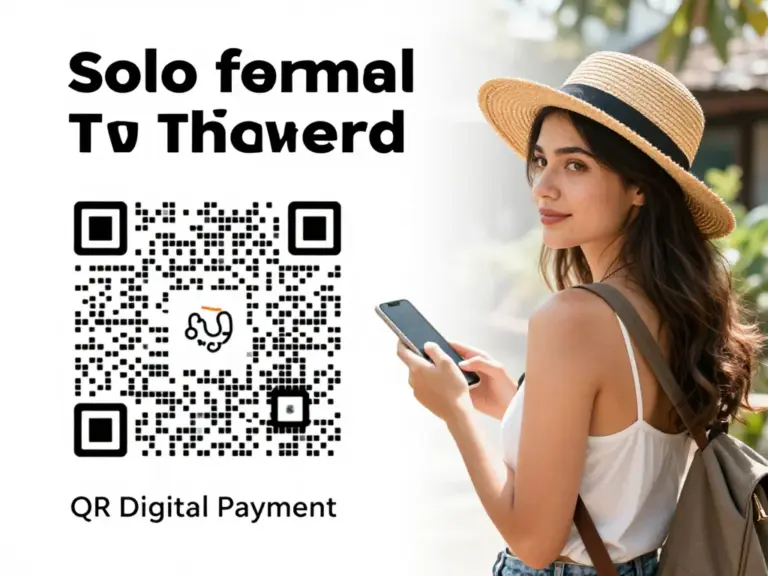
Thailand has leapfrogged traditional credit card infrastructure in favor of a robust QR code-based system known as PromptPay. Almost every merchant, from high-end malls to tiny market stalls, displays a QR code at the checkout. This shift is driven by the Thai government’s push toward a digital economy, making transactions faster and more hygienic. For a traveler, this means that carrying a bulky wallet full of banknotes is becoming increasingly optional.
Why Digital Payments are a Solo Female Traveler’s Best Friend
As a solo female traveler, your priorities often include security, ease of access, and efficient money management. Digital payment methods address these concerns directly. By minimizing the cash you carry, you reduce the risk of theft or loss. Furthermore, digital transactions leave a paper trail, allowing you to track your spending in real-time through your banking app, which is a crucial aspect of responsible solo travel.
Enhanced Safety and Convenience
Beyond the safety of not carrying cash, digital payments provide transparency. You know exactly what you are paying, which helps avoid potential misunderstandings regarding change or pricing at local markets. It also removes the awkwardness of needing exact change, which can sometimes be a challenge in busy tourist areas. When you can simply scan and pay, you blend in more easily with locals, which is often a goal for solo travelers who prefer a low-profile approach.
How to Set Up Your Digital Payment Toolkit
While the local QR system is amazing, it is primarily designed for local bank accounts. As a foreign tourist, you need a strategy. You cannot simply download a local banking app without a Thai bank account, but you can leverage international travel cards and specific fintech apps that are becoming increasingly compatible with the global travel ecosystem.
- Travel-Friendly Debit Cards: Cards like Wise or Revolut are indispensable. They offer competitive exchange rates and allow you to withdraw cash at ATMs with minimal fees.
- Local SIM Card: Having a reliable data connection is mandatory. You need a local SIM (like AIS, DTAC, or TrueMove) to ensure you have consistent access to your banking apps, especially for two-factor authentication (2FA) requests.
- Offline Maps and Backup: Never rely 100% on your phone. Always keep a small amount of cash in a separate location, just in case your battery dies or the internet connection is unstable.
| Payment Method | Best For | Pros | Cons |
|---|---|---|---|
| Cash (THB) | Street food, small markets | Universal acceptance | Risk of loss/theft |
| Credit/Debit Card | Malls, hotels, restaurants | Secure, rewards | Fees, not accepted everywhere |
| Digital QR/Apps | Convenience, tracking | Fast, no physical contact | Requires data/local account |
Practical Usage and Troubleshooting
When you see a QR code at a merchant, it is usually linked to the local banking network. If you are using an international card, you might find that you cannot scan these codes directly. However, many larger shops and malls accept international credit cards via contactless payment (NFC) terminals. If you are struggling, always have a backup plan. The golden rule for solo travel in Thailand is to be tech-savvy but never tech-dependent.
Checklist for the Cashless Traveler
Before you head out for the day, ensure you have ticked these boxes:
- Charge your phone: Always carry a lightweight power bank.
- Separate your funds: Keep a backup debit card in your hotel safe.
- Check your data: Ensure your roaming or local data plan is active.
- Carry emergency cash: Keep at least 500-1,000 THB in a hidden pocket for emergencies.
- Know your limits: Check if your bank has daily transaction limits for international usage.
Security Tips for Solo Women
Technology is a tool, but it is not a substitute for situational awareness. When using your phone to pay, be mindful of your surroundings. Do not stand in the middle of a busy sidewalk to perform a transaction; step to the side. Ensure your phone has a strong passcode or biometric lock. If you lose your phone, you lose your access to funds, so enable ‘Find My Phone’ features and ensure you have a way to contact your bank to freeze cards remotely.
Conclusion
Embracing digital payments in Thailand can significantly enhance your solo travel experience, offering a level of ease and security that makes navigating the country a breeze. While the system is highly advanced, it is best approached with a hybrid strategy: enjoy the convenience of digital tools, but always respect the reliability of traditional cash. By staying prepared and aware, you can focus on what truly matters—exploring the beautiful culture and landscapes of Thailand with confidence and peace of mind.
Frequently Asked Questions (FAQ)
Can I use my home country’s banking app to scan Thai QR codes?
Generally, no. Most Thai QR codes are tied to the local PromptPay system, which requires a Thai bank account. You should rely on international credit cards for larger merchants and cash for smaller ones.
Is it safe to use credit cards in small shops?
In reputable shops and malls, it is safe. However, in small, unverified street stalls, it is better to use cash to avoid potential card skimming risks, even if the option is available.
What if my phone battery dies?
This is why you should always carry a power bank and some emergency cash. Never rely solely on your phone for financial transactions.
References
Bank of Thailand: Payment Systems Overview
Tourism Authority of Thailand: Travel Tips