Digital Payments and QR in Thailand: A Budget Backpacker’s Guide for 2026
- Digital Payments and QR in Thailand: A Budget Backpacker’s Guide for 2026
Thailand has undergone a massive financial transformation. For budget backpackers, understanding digital payments and QR in Thailand is no longer just a convenience; it is a critical skill for managing your travel budget efficiently. Gone are the days when you needed a heavy pouch of cash for every street food encounter. Today, from bustling Bangkok markets to remote island ferries, the PromptPay system and local e-wallets dominate the landscape.
digital payments and QR in Thailand: The Evolution of Cashless Travel in Thailand
By 2026, Thailand’s adoption of the national standardized QR code system has reached near-ubiquity. Whether you are buying a 20-baht iced coffee or paying for a taxi, the QR code is the standard. For travelers, this shift means you can track your spending in real-time, avoid frequent ATM withdrawal fees, and minimize the risk of carrying large amounts of cash.
Why Digital Payments Matter for Backpackers
Backpacking is all about balancing costs. Every time you withdraw money from a Thai ATM, you are hit with a flat fee—usually around 220 THB (approx. $6 USD). If you withdraw cash five times during a trip, that is $30 USD wasted on fees. By utilizing digital payment methods, you can significantly reduce these unnecessary overhead costs.
How the System Works: PromptPay and QR
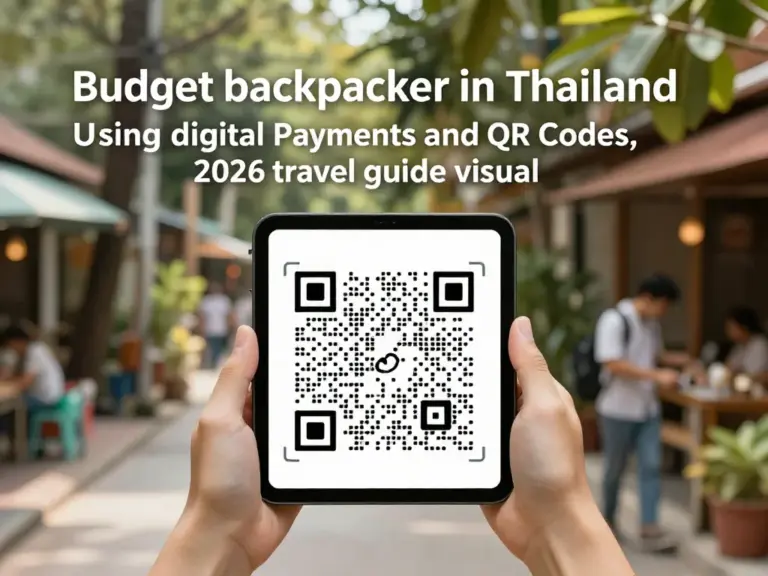
The backbone of Thailand’s digital economy is PromptPay. It connects bank accounts to mobile numbers or ID cards, allowing for instant, zero-fee transfers. Merchants display a static or dynamic QR code at their checkout counter. You simply open your banking app, scan the code, verify the amount, and confirm. The transaction is near-instantaneous.
| Payment Method | Best For | Convenience |
|---|---|---|
| Local E-Wallets | Street food, small vendors | High (No fees) |
| International Cards (Visa/Mastercard) | Hotels, malls, big chains | Medium (Often incurs fees) |
| Cash | Remote areas, local markets | Low (Requires ATM visits) |
Setting Up Your Digital Wallet as a Traveler
For short-term tourists, setting up a full Thai bank account can be difficult due to residency requirements. However, you have two main strategies to leverage digital payments and QR in Thailand:
- Travel Debit Cards: Services like Revolut, Wise, or Monzo often support QR scanning features or provide competitive FX rates, though they may not always scan native Thai QR codes directly.
- Tourist E-Wallets: Look for apps that support cross-border QR payments. Several regional payment apps now have interoperability agreements with Thailand’s PromptPay, allowing you to scan Thai QR codes using your home currency app.
- The “Cash-Lite” Hybrid: Keep a small amount of cash for emergency situations or very rural areas, while using contactless cards or digital wallets for 80% of your transactions.
Checklist: Staying Cashless in Thailand
- Check your bank’s international policy: Ensure your home bank does not charge high fees for foreign transactions.
- Download a Travel-Friendly App: Check if your home country’s banking app or a travel-specific wallet supports “Scan to Pay” in Thailand.
- Carry a Backup Card: Always have a physical Visa or Mastercard in case digital systems fail or your phone battery dies.
- Notify your bank: Let them know your travel dates to prevent account blocks.
- Keep a small emergency cash stash: Always carry 1,000–2,000 THB for rural areas where electricity or connectivity might be unreliable.
Common Pitfalls and How to Avoid Them
While the system is robust, it is not flawless. Connectivity is the biggest hurdle. If you are on an island or in a remote mountain village, local internet might be spotty. If the merchant’s internet is down, the QR system will not work. Additionally, some smaller vendors may still prefer cash to avoid administrative complexities. Always observe the local environment; if everyone is paying with cash, do not insist on a digital transaction.
Conclusion
Embracing digital payments and QR in Thailand is the smartest move a backpacker can make in 2026. It saves you money on ATM fees, provides a clearer picture of your daily budget, and integrates you more deeply into the modern Thai experience. By preparing your apps before you land and keeping a sensible amount of cash as a backup, you can spend less time worrying about finances and more time enjoying the Land of Smiles.
Frequently Asked Questions (FAQ)
A: Not exactly. While contactless (NFC) payments are growing in malls and big chains, they are not the same as the QR code system. The QR system is far more widespread, especially for small businesses.
Q: Is it safe to scan QR codes from street vendors?
A: Yes, the national QR system is highly regulated by the Bank of Thailand. It is generally safer than carrying large wads of physical cash.
Q: What if I lose my phone?
A: This is the main risk of going fully digital. Always have a secondary payment method, such as a physical credit card or debit card, stored separately from your phone.