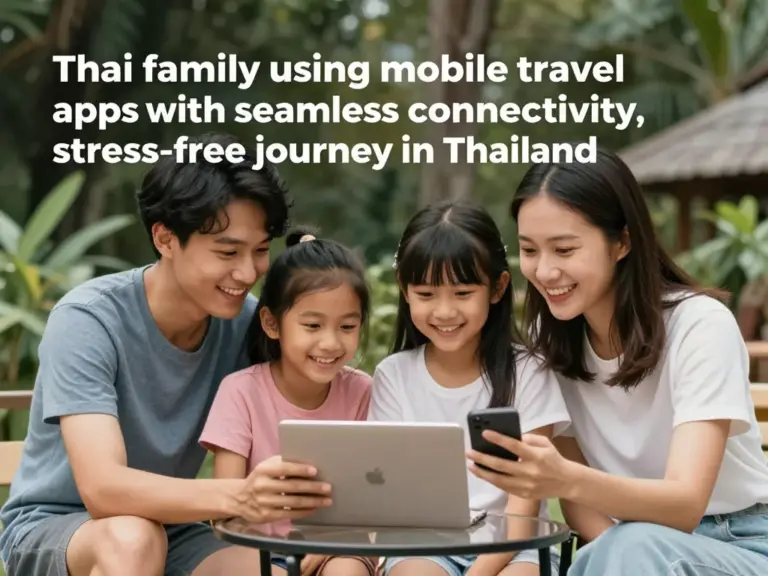
Mobile Apps and Connectivity in Thailand: A Family Guide to Stress-Free Travel
- Mobile Apps and Connectivity in Thailand: A Family Guide to Stress-Free Travel
Traveling to Thailand with family is an exciting adventure, but navigating logistics requires reliable communication. Ensuring seamless connectivity in Thailand is no longer just about having a phone signal; it is about accessing the right apps for transportation, food delivery, and emergency services. This guide breaks down exactly how to stay connected and which digital tools will make your family vacation smoother, safer, and significantly more enjoyable.
Understanding Connectivity in Thailand: SIM Cards and eSIMs
Before you even land, you need a plan for connectivity in Thailand. Fortunately, Thailand has some of the best mobile infrastructure in Southeast Asia. For families, having a local connection is vital for using ride-hailing apps and keeping track of everyone in crowded markets or malls.
Physical SIM Cards vs. eSIMs
The debate between physical SIMs and eSIMs is common. For most modern travelers, eSIMs are the superior choice for convenience. You can purchase them before departure, meaning you have data the moment the plane touches down. However, physical SIM cards remain a solid option, especially if you have older devices or need a local phone number for registering on certain Thai platforms.
| Option | Pros | Cons |
|---|---|---|
| eSIM | No physical swapping; instant activation; eco-friendly. | Requires a carrier-unlocked, eSIM-compatible phone. |
| Tourist SIM | Reliable; includes a local number; easy to top up. | Requires finding a kiosk at the airport; physical handling. |
| Roaming | Zero setup required; keep your home number active. | Often expensive; data caps apply; potential latency issues. |
Must-Have Mobile Apps for Thailand
Once you have established connectivity in Thailand, your phone becomes your most powerful travel companion. The ecosystem of apps here is highly developed, specifically for the tourism and service sectors.
Transportation and Ride-Hailing
Food Delivery and Dining
When traveling with children, there will be days when a sit-down restaurant is not feasible. Apps like GrabFood and Foodpanda are ubiquitous. They allow you to order everything from authentic Thai street food to familiar international comfort foods, delivered directly to your hotel room or villa.
Google Maps is generally reliable, but Google Translate is your best friend when you need to communicate with locals who may not speak English. The ‘Camera’ feature in Google Translate is particularly useful for reading menus and signs in Thai script.
Family Safety and Digital Organization
Maintaining connectivity in Thailand is also about safety. When exploring bustling areas like Bangkok’s Chatuchak Market or the busy beaches of Phuket, it is easy to get separated. Use location-sharing features within apps like WhatsApp or Google Maps to keep track of family members in real-time. Ensure everyone has a portable power bank, as heavy use of GPS and mapping apps will drain your smartphone battery significantly faster than usual.
Practical Checklist for Digital Preparation
- Unlock your phone: Check with your home carrier to ensure your device is unlocked before travel.
- Download offline maps: Download the Google Maps area for your destination to use when cell signals are spotty.
- Install essential apps early: Download and set up Grab, Foodpanda, and Google Translate while still on your home Wi-Fi.
- Save emergency numbers: Keep the Tourist Police number (1155) saved in your contacts.
- Bring a power bank: A high-capacity portable charger is non-negotiable for full-day excursions.
Managing Costs and Data Usage
While data is relatively inexpensive in Thailand, it is wise to monitor your usage. Most local carriers offer ‘Unlimited’ data packages for tourists. However, understand that ‘Unlimited’ often comes with a ‘Fair Usage Policy’ where speeds are throttled after a certain amount of high-speed data is consumed. For families, consider getting one primary data SIM for a hotspot device, or ensure every family member has a small data package to avoid reliance on a single device.
Conclusion
Ensuring connectivity in Thailand transforms your trip from a logistical hurdle into a smooth, stress-free experience. By preparing your devices, choosing the right data plan, and utilizing the robust app ecosystem available, you can focus on what truly matters: creating unforgettable memories with your family. Remember that while technology is a great tool, it is meant to enhance, not dictate, your travel experience. Stay connected, but don’t forget to look up and enjoy the beautiful Thai scenery.
Frequently Asked Questions (FAQ)
A: While international roaming works, it is often significantly more expensive than a local SIM or eSIM. A local plan provides better data rates and a local number, which is often required for registering on Thai ride-hailing apps.
A: Public Wi-Fi is available in malls and cafes, but it is generally not secure. We recommend using a reputable VPN if you must connect to public networks, or simply stick to your mobile data for sensitive tasks like banking.
A: Yes, you can often register with your home number, but having a Thai number is better. Some local services may require a local number for OTP (One-Time Password) verification or for drivers to call you if they cannot find your location.
References
Tourism Authority of Thailand
AIS (Major Thai Mobile Carrier)
DTAC (Major Thai Mobile Carrier)