Mobile Apps and Connectivity in Thailand: A Senior’s Guide to Stress-Free Travel in 2026
- Mobile Apps and Connectivity in Thailand: A Senior’s Guide to Stress-Free Travel in 2026
Traveling to Thailand in 2026 offers an incredible mix of culture, comfort, and natural beauty. However, for seniors, the prospect of managing digital logistics can sometimes feel daunting. Understanding mobile apps and connectivity in Thailand is the key to unlocking a stress-free experience. Whether you are navigating the bustling streets of Bangkok or relaxing on a beach in Phuket, having reliable internet and the right tools at your fingertips transforms your journey from challenging to seamless.
mobile apps and connectivity in Thailand: Why Connectivity Matters for Seniors in Thailand
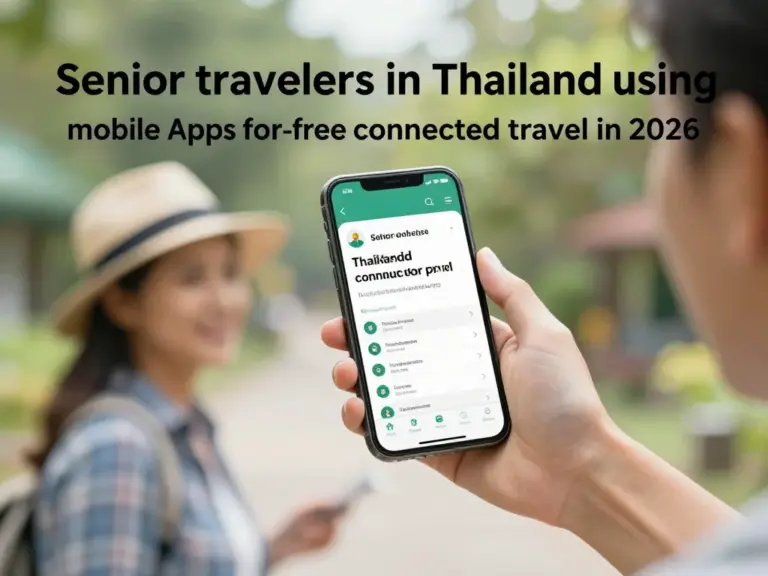
In 2026, Thailand is a highly digital society. From ordering a taxi to checking train schedules, nearly every aspect of modern travel relies on smartphone integration. For seniors, this connectivity isn’t just about convenience—it is a vital safety net. With instant access to translation apps, emergency contacts, and real-time maps, you can explore with confidence, knowing you are never truly lost or unable to communicate.
Choosing the Right Connectivity Option
Before you board your flight, you must decide how you will stay connected. Thailand offers robust infrastructure, but choosing the wrong method can lead to unexpected costs or poor service.
| Option | Best For | Pros | Cons |
|---|---|---|---|
| eSIM | Modern Devices | Easy setup; no physical card needed | Requires compatible phone |
| Tourist SIM | Short-term trips | Cheap; local number included | Requires airport queueing |
| Pocket Wi-Fi | Couples/Groups | Connects multiple devices | Must carry extra battery |
| Roaming | Emergency Use | No setup required | Can be very expensive |
The Rise of eSIM Technology
By 2026, eSIMs have become the gold standard for travelers. If your smartphone is unlocked and relatively new, an eSIM allows you to purchase and activate a Thai data plan before you leave home. This means your phone works the moment you land, eliminating the need to search for a kiosk or swap out tiny physical SIM cards.
Essential Apps for Thailand Travel
Once you are connected, your smartphone becomes a personal concierge. Here are the must-have applications to download before you arrive:
- Grab: The primary app for ride-hailing. It eliminates language barriers and haggling with taxi drivers, as the price is fixed and the destination is pre-set.
- Google Maps: Essential for navigation. Download offline maps for areas you plan to visit, ensuring you stay oriented even if cellular service drops.
- Google Lens/Translate: These tools are invaluable for reading menus, street signs, or medicine labels. Use the camera feature for instant, real-time translation.
- Line: While WhatsApp is popular globally, Line is the primary communication app used by locals and businesses in Thailand. Keep it handy for contacting hotel staff or tour guides.
A Senior’s Checklist for Digital Readiness
To ensure your trip is smooth, follow this preparation checklist before leaving home:
- Unlock Your Phone: Ensure your home carrier has unlocked your device so it accepts foreign SIMs or eSIMs.
- Download Offline Content: Save your hotel addresses, important documents, and offline maps in Google Maps.
- Install an Authenticator App: Security is paramount. Use a reputable authenticator app rather than relying solely on SMS for two-factor authentication (2FA), as you might not receive texts on your home number.
- Bring a Portable Power Bank: Using GPS and translation apps drains batteries quickly. A lightweight power bank is a travel essential.
- Set Up Digital Payments: Many Thai vendors now prefer QR code payments. While cash is still king, having your banking app ready is becoming increasingly useful.
Common Challenges and How to Overcome Them
Even with the best preparation, you might encounter minor hurdles. For example, some public Wi-Fi networks in hotels or cafes require a complex login process. If you find yourself struggling, do not hesitate to ask hotel staff for assistance—they are generally very helpful. Furthermore, be cautious of “free” public Wi-Fi in airports or malls; these are often unencrypted, so it is safer to use your own mobile data plan for sensitive transactions like online banking.
Conclusion
Navigating mobile apps and connectivity in Thailand is entirely manageable with a little foresight. By embracing these digital tools, you are not just making your trip easier—you are opening doors to a more authentic and independent travel experience. Take the time to set up your tech before you leave, and you will be free to focus on what truly matters: enjoying the vibrant culture and warm hospitality of the Land of Smiles.
Frequently Asked Questions (FAQ)
A: While international roaming works, it is often significantly more expensive than a local SIM or eSIM. For a trip longer than a few days, a local data plan is almost always the more cost-effective choice.
A: Yes, Grab is widely considered safe and reliable. It is regulated, provides driver identification, and tracks your route via GPS, offering peace of mind that traditional street taxis sometimes lack.
A: Always keep a physical copy of your hotel address and emergency contact numbers in your bag. Additionally, ensure you have “Find My Phone” enabled on your device before you travel, so you can track or lock it remotely if needed.
A: Most smartphones from the last 4-5 years are compatible with Thai 4G and 5G networks. Check your phone’s specifications online to ensure it supports the frequency bands used in Thailand, or check with your carrier.
References
Tourism Authority of Thailand Official Site
AIS (Leading Thai Mobile Operator)
TrueMove H (Leading Thai Mobile Operator)